
Preserving heritage means caring for the environment
Under the guidance of experienced mentors, we held two practical workshops at the Giser miner’s house in late June – one on renovating interior furniture and the other on renovating building furniture.
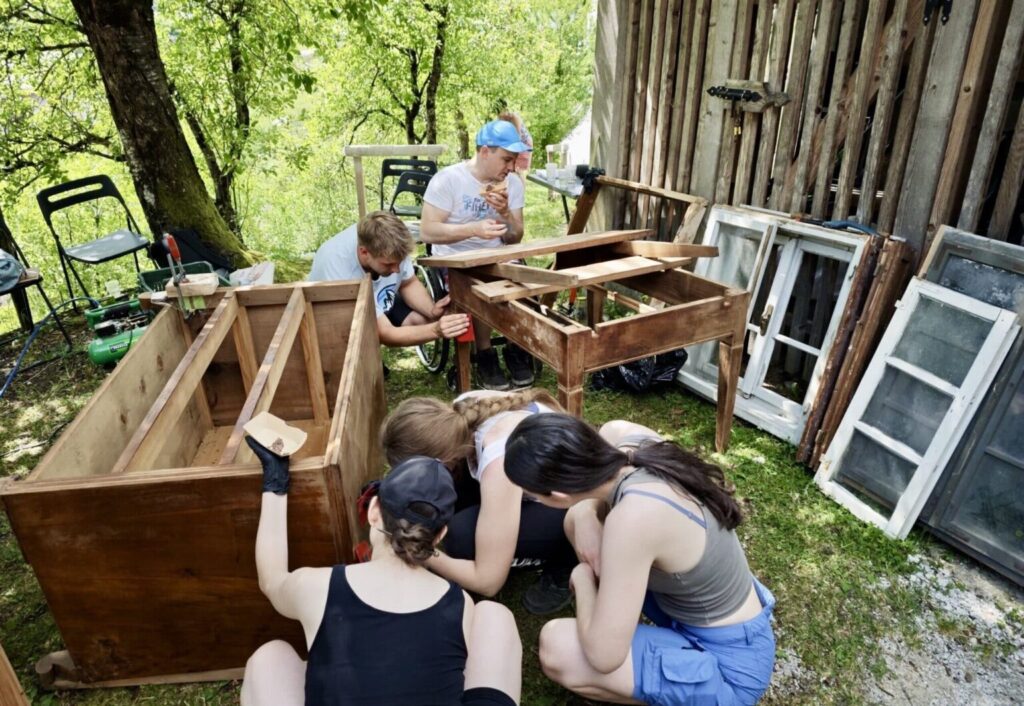
Handicrafts as a path to a sustainable future
Renovation of interior furniture
At the workshop for renovating interior furniture, we renovated two interesting pieces. The use of shellac or French polish, which we used to treat an older chest of drawers, was particularly interesting. With the new surface treatment, it has regained its former luster, and a beautiful wood pattern has been revealed. At the same time, we were able to preserve its patina. The process of restoring the massive extendable table was also interesting – a piece that is not exactly an everyday part of home furniture with its construction. After thorough cleaning and preparation, we re-protected it with natural oil for long-term use and low-maintenance.
Renovation of building furniture – windows
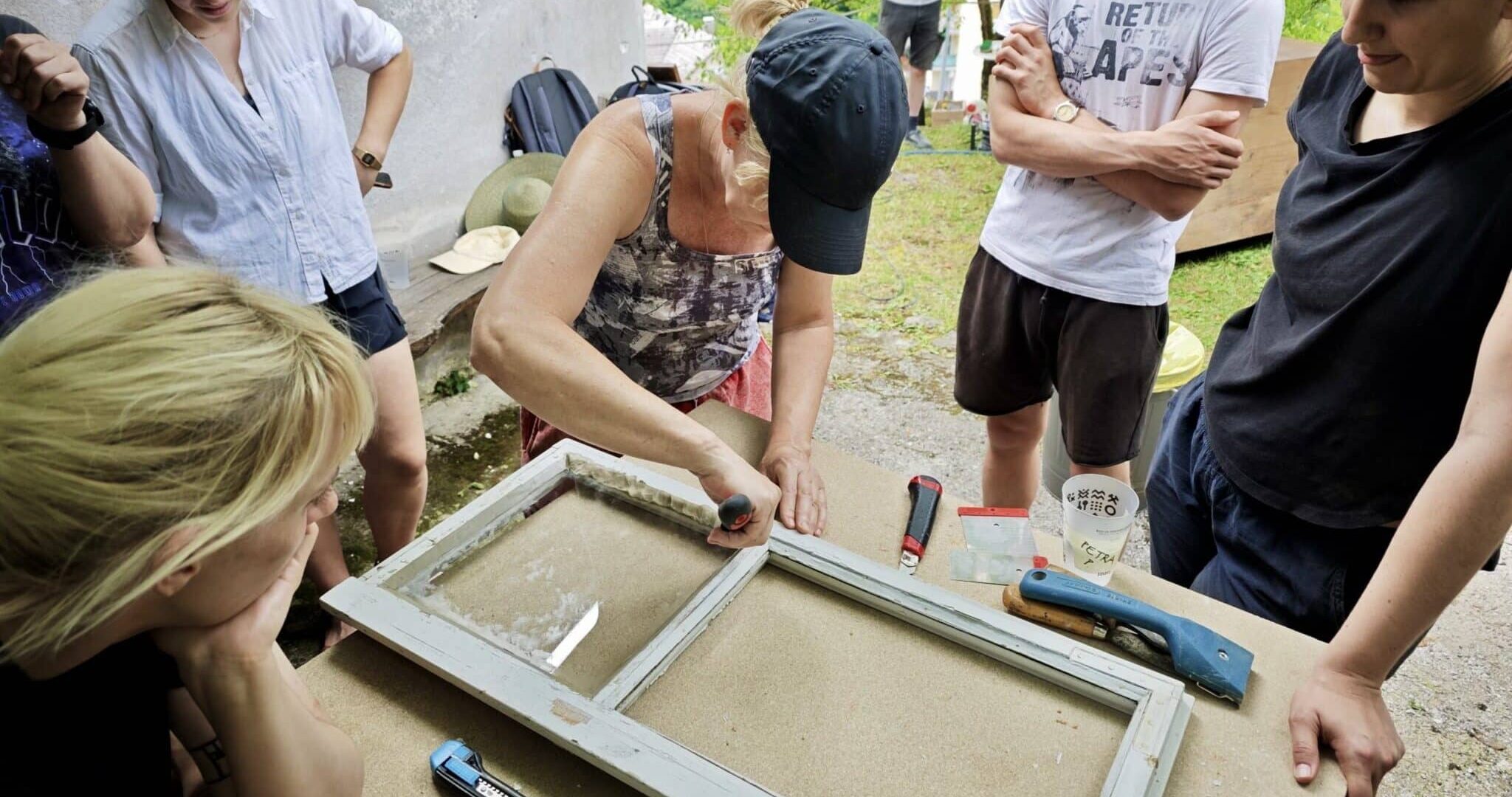
At the same time, a workshop on renovating building furniture was also held. After last year’s success with renovating the front door, this year we focused on the windows. We repaired some windows on the Giser house, and participants also brought their old windows, analyzed them, and started the initial restoration phases as well as re-glazing using linseed oil glazing putty.
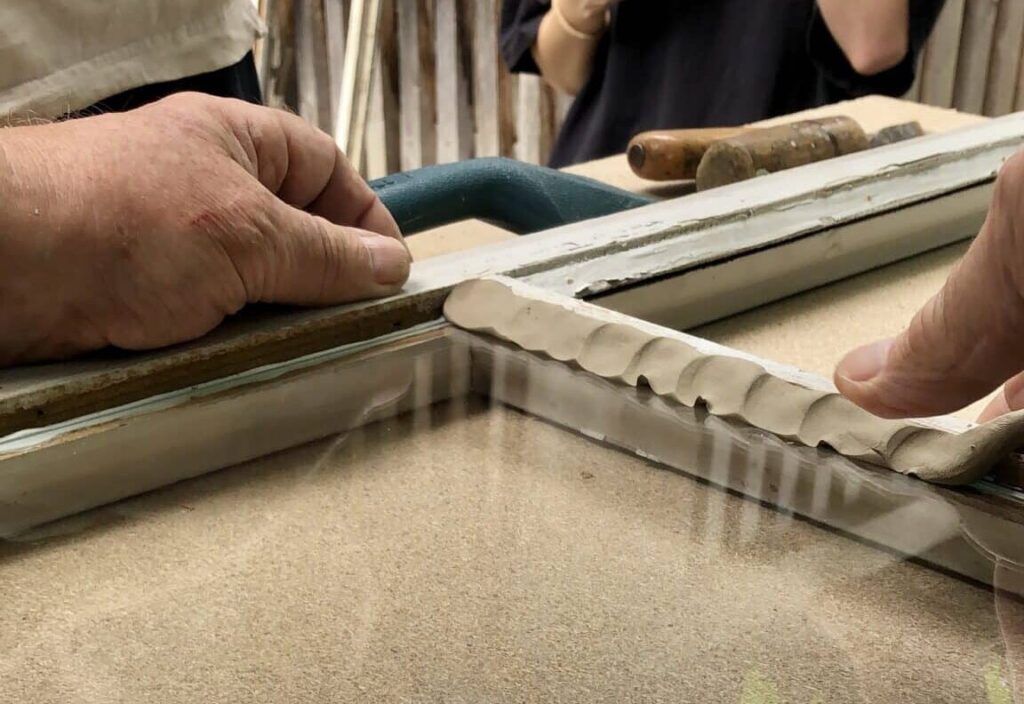
“The most sustainable building is the one that’s already built.”
-Carl Elefante
Both workshops proved that these skills are accessible to everyone, despite their technical nature. Although it is easier to start with the support of an experienced mentor, the procedures are simple enough that they can be continued at home after initial guidance—with simple tools, some willpower, and attention to quality execution.
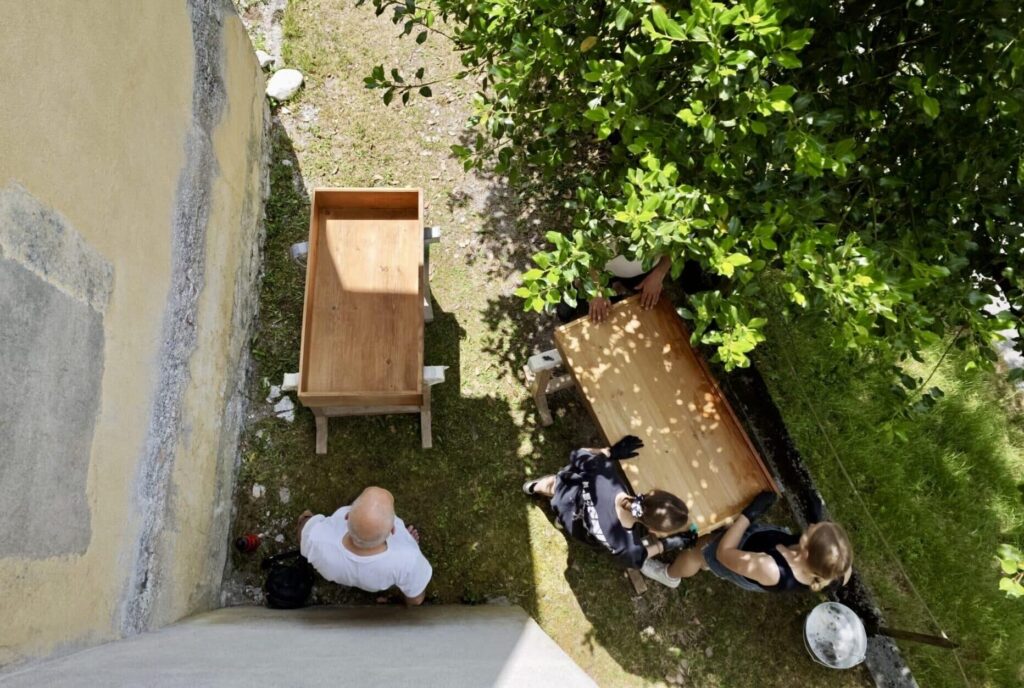
Community, exchange, and respect for heritage
Workshops were primarily intended for young people, who also attended them in large numbers. This clearly shows that these are not just skills from the past, but are becoming relevant again – as skills that young people recognize as useful, valuable, and worth passing on.
In addition to practical work, the workshops were also a space for socializing (including intergenerational), exchanging experiences, and strengthening awareness of the importance of preserving heritage. The atmosphere was relaxed, the work was creative, and the results are proof that handmade work is still alive – and still has an important place today.
The project is funded by the Eko sklad and the Ministry of the Environment, Climate, and Energy.